
PANSA Air Traffic Controller Recruitment
PANSA, the Polish Air Navigation Services Agency (Polska Agencja Żeglugi Powietrznej, PAŻP), recruits candidates for a course that leads to a Polish air traffic controller licence. The requirements, selection stages, and training structure below are from PANSA's official Polish-language pages, checked on 16 November 2026. PANSA says it runs recruitment for the course in cycles.
· by Michal Zembol
Who this employer is
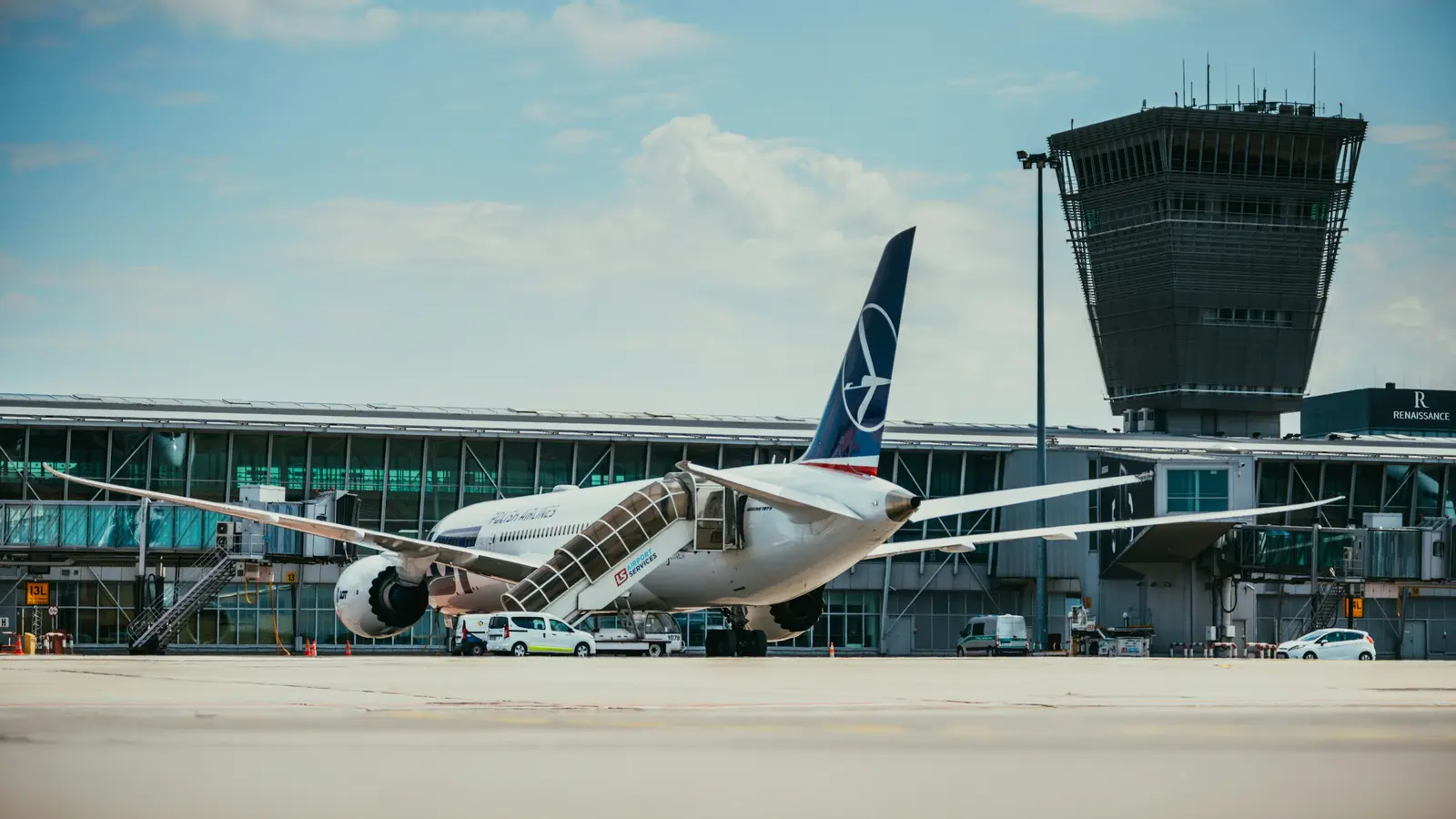
PANSA is responsible for air traffic safety in Polish airspace. On its controller course page ("Kurs na KRL", KRL standing for kontroler ruchu lotniczego, air traffic controller), the agency says it is the only institution in Poland that trains and employs civil air traffic controllers, and that more than 500 of its controllers look after flights over the country. Its separate careers site gives a figure of about 600 people working as controllers and says PANSA has been the country's only air navigation service provider since it was set up in 2007. The two official figures differ, and this article reports both. What an air navigation service provider is, in general, is explained in What Is an Air Navigation Service Provider?.
Who can apply
The course page lists these requirements for candidates:
- At least secondary education completed with the matura (the Polish secondary school leaving examination).
- Good health.
- Very good spoken and written English.
- Fluent spoken and written Polish.
- Correct pronunciation and clear diction.
- Full public rights.
The page also lists qualities PANSA values, including analysing situations and making decisions, observation and spatial orientation, handling stress, determination, teamwork, and readiness to learn. It does not publish an upper age limit or a nationality rule on that page, and this article does not add one. The Polish language requirement matters for anyone applying from abroad. Language rules in general are covered in English Language Requirements for Air Traffic Controllers.
Selection stages
- Review of the submitted application.
- FEAST aptitude tests, taken electronically.
- An assessment centre.
- An interview, together with an aviation medical examination to Class 3.
FEAST is EUROCONTROL's selection battery, and the recruiting organisation decides which parts it uses and what standard it applies. It is explained in What Is the FEAST Test?. The Class 3 medical certificate is the standard for controllers, described in Air Traffic Controller Medical Requirements. PANSA states that it reserves the right to change these procedures.
How the course is structured
The course page describes three blocks. The first, at PANSA's ATS personnel training centre (Ośrodek Szkolenia Personelu ATS), is a basic theory course of 12 to 13 weeks, a two-week theory examination session, and an assessment of basic practical skills on the simulator.
The second is the rating course at the same centre: 4 to 5 weeks of theory, a theory exam that admits you to simulator training, then 4.5 to 5.5 months of simulator training. It ends with a practical assessment, held as a state examination, for the student air traffic controller licence (S-ATCL).
The third is on-the-job training at the unit where you will work, for 9 to 11 months, leading to the unit endorsement. A final practical assessment, again as a state examination, leads to the air traffic controller licence (ATCL). How a licence, a rating, and a unit endorsement fit together is explained in Licence, Rating and Unit Endorsement.
PANSA says the training up to the licence takes at most 20 to 22 months. Its news post of 21 April 2026 describes the same path in rounder terms: about half a year of theory, half a year on simulators, then 12 months of practice at the future workplace, in an area control centre, an approach unit, or a tower, over two years in total.
Assessment runs through the whole course. The course page lists partial tests during theory, final written and oral exams for each course, practice assessment cards, periodic simulator assessments, and the final practical assessments and exams for both licences. After the course, PANSA offers work in its air traffic units, and the course page says the specific units being recruited for are named in each offer.
Course numbers in 2026
The 21 April 2026 news post said 45 candidates had started the spring edition of the course, one of two editions planned for 2026, with a second starting in the autumn. It said PANSA gained 63 new controller licences in 2024 and 2025, after training had been halted in 2020 and 2021, and that around 190 people would be in training to become controllers during 2026. Those are PANSA's own figures. Pay is not published on the course page, so none is given here. How pay is reported for other employers is outlined in Air Traffic Controller Salary.
Which recruitment this describes
On 16 November 2026, PANSA's Kurs na KRL page said recruitment for the candidate course is organised in cycles and listed the requirements and four selection stages above. The April 2026 news post said recruitment for the autumn 2026 edition was open at that time and pointed to pansakariera.pl. This article does not say whether a recruitment round is open today. Check the official careers site for the current offer, which names the units being recruited for. PANSA gives rekrutacja@pansa.pl as its recruitment contact address.