What Does an Air Traffic Controller Do?
An air traffic controller works a defined piece of the sky, or a defined piece of an aerodrome, for the time they are on that position. They do not fly the aircraft. They tell the pilot what is cleared, and they keep that flight separated from the others they are responsible for.
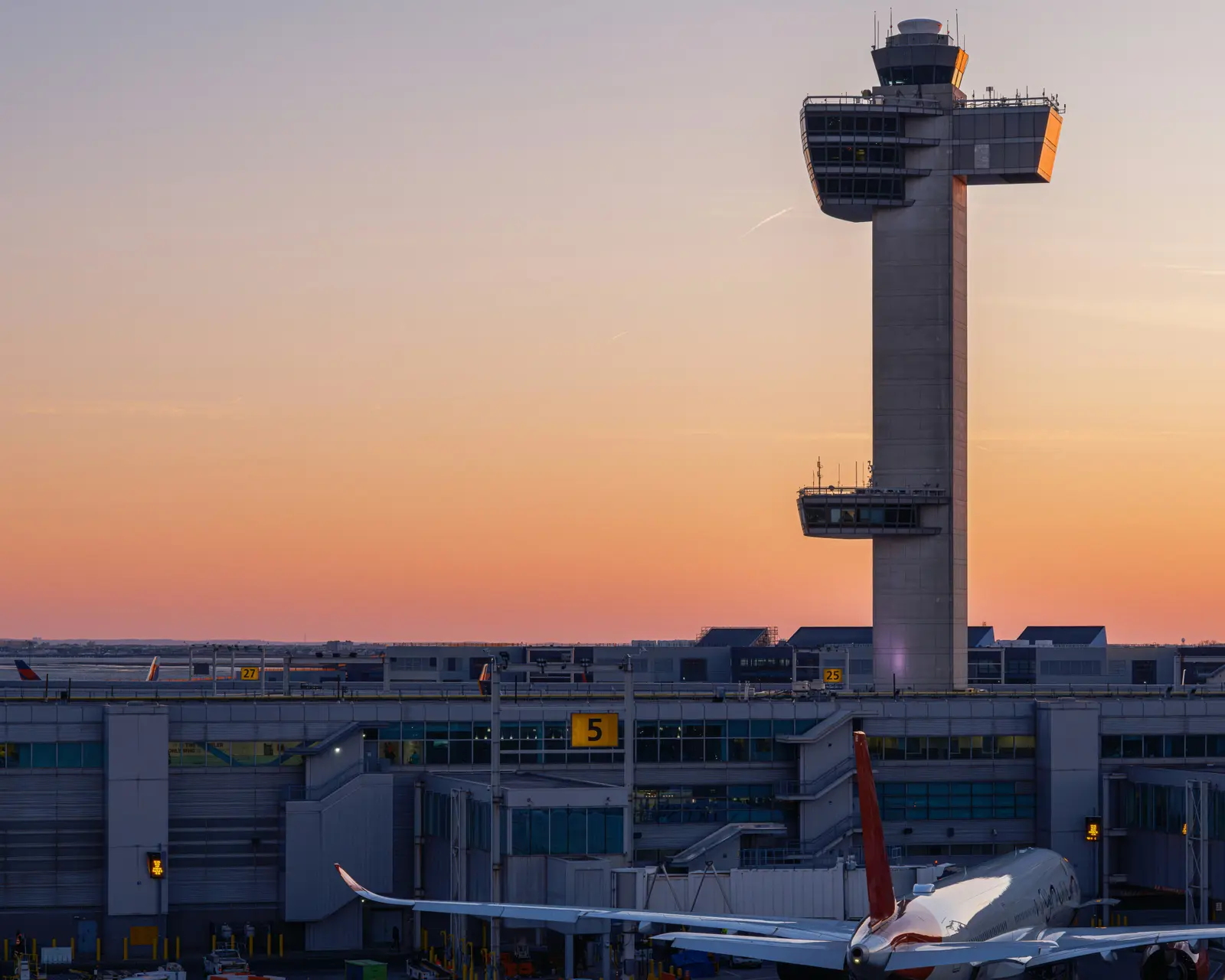
One position, not the whole sky
A controller is checked out for a position. In a tower that may be the runway and the circuit. In an approach unit it is the airspace around one or more airports. In an area centre it is one sector, or a group of sectors combined for a quiet hour. The rest of the operation belongs to other people.
The shift is a series of those positions, with breaks between them. How long a person sits on one position, and how the roster is built, is set by that unit. It is not the same number everywhere.
Keep a picture, then act
The work starts with the picture. In a tower the picture is mostly what the controller can see: the runway, the taxiways, and the aircraft close to the field. In an approach unit or an area centre it is usually a surveillance display, with each flight shown by position, level, and identity. Where there is no surveillance, the picture is built from pilot reports of position and time.
From that picture the controller decides who needs an instruction now and who can wait. A clearance is permission: to take off, to land, to climb, to turn, to enter the runway. The pilot flies the aircraft. The controller does not.
Take the position, then give it back
A sitting starts with a handover. The controller who is leaving says which flights are there, what each one has been cleared to do, and what is still being agreed with the next unit. The person who sits down does not start from an empty picture. They take that traffic, and from that moment it is theirs.
The sitting ends the same way, in reverse. The flights are still there when the time is up. The next controller has to have them, and has to have accepted them, before the first one leaves the frequency.
A record of what was cleared
Each flight the controller is working has a record: callsign, route or intention, and the clearance already given. On some units that record is still a paper strip. On others it is on the screen beside the surveillance picture. The form depends on the unit. The point is the same. The controller has to know what was said, because the next instruction has to fit it.
Talk, and coordinate
Most of the hour is speech. The controller transmits, the pilot reads back, and a wrong readback is caught before the aircraft turns. The frequency is shared, so the transmission has to be short enough for the next aircraft to get in.
The other half of the job is not on the pilot's frequency. Before an aircraft leaves the position, the next unit is told it is coming, and the conditions are agreed: level, route, and when. That coordination can be by telephone to the sector beside yours, or built into the system the unit uses. A handoff that the next controller has not accepted is not finished.
Yes, no, or later
Many of the calls are requests. A pilot asks to climb, to leave the route around weather, or to take a shorter path. The controller looks at the other flights on that position and clears it, clears a smaller change, or tells the pilot to wait. That decision is the work: this flight, against the flights already there.
The same decision is made when nobody has asked. Two aircraft are closing on each other, or an aircraft is about to meet the boundary of the position, and the controller acts before either of those happens. Waiting until they have already met is too late.
Sometimes two people on one sector
Some units put two controllers on a busy sector. One plans and coordinates. The other talks to the aircraft. The split is local. A quiet tower, or a quiet sector, is often one person. A description of a two-person sector does not describe every position.
What the job is not
A controller does not dispatch the airline's flight, does not load the aircraft, and does not decide the airline's schedule. They take the flights that are already in, or about to enter, their airspace, and they make those flights safe and orderly relative to each other.
They also do not work every kind of unit on the same day. The endorsement is for the unit they are checked out on. A tower controller on duty is doing the tower's job. An area controller on duty is doing that sector's job.